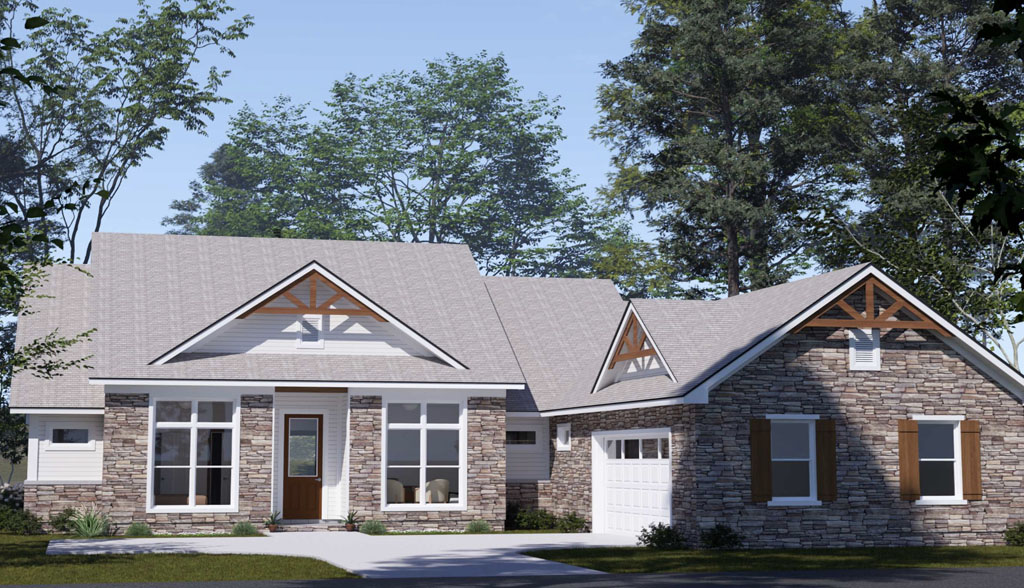
For developers looking to maximize profits and minimize construction headaches, the question of cost-efficiency in home design is always front and center. Whether you’re building a small neighborhood of spec homes or planning an infill project on narrow lots, the layout, size, and architectural style of your homes can make a significant difference in your bottom line. So what makes a house plan cost-efficient to build, and which designs are leading the way?
Simple Footprints Mean Lower Costs
One of the easiest ways to save money in construction is by selecting a house plan with a compact, rectangular or square footprint. According to the National Association of Home Builders (NAHB), the foundation and framing make up over 30% of a new home’s construction costs. Designs that avoid complex angles, bump-outs, and unnecessary corners require less material and labor, leading to a more predictable and efficient build.
Single-story homes are often more cost-effective on a per-square-foot basis when built on flat lots, especially when the land isn’t in short supply. However, for tighter lots or areas where land costs more than building vertically, two-story homes can stretch your square footage without significantly increasing your foundation and roof costs.
Rooflines Matter More Than You Might Think
The roof is one of the most expensive exterior components of any home, and complexity adds cost fast. Designs with multiple gables, dormers, or steep pitches can be beautiful but also expensive to build and maintain. A simple gable or hip roof with a moderate pitch is often the most budget-friendly choice, especially when paired with affordable roofing materials like architectural shingles.
NAHB data estimates that roofing accounts for around 3 to 4 percent of total construction costs, but this can increase significantly with more intricate roof geometry. Keeping the roof design straightforward reduces framing time and cuts down on waste.
Open Floor Plans Help Keep Construction Costs Low
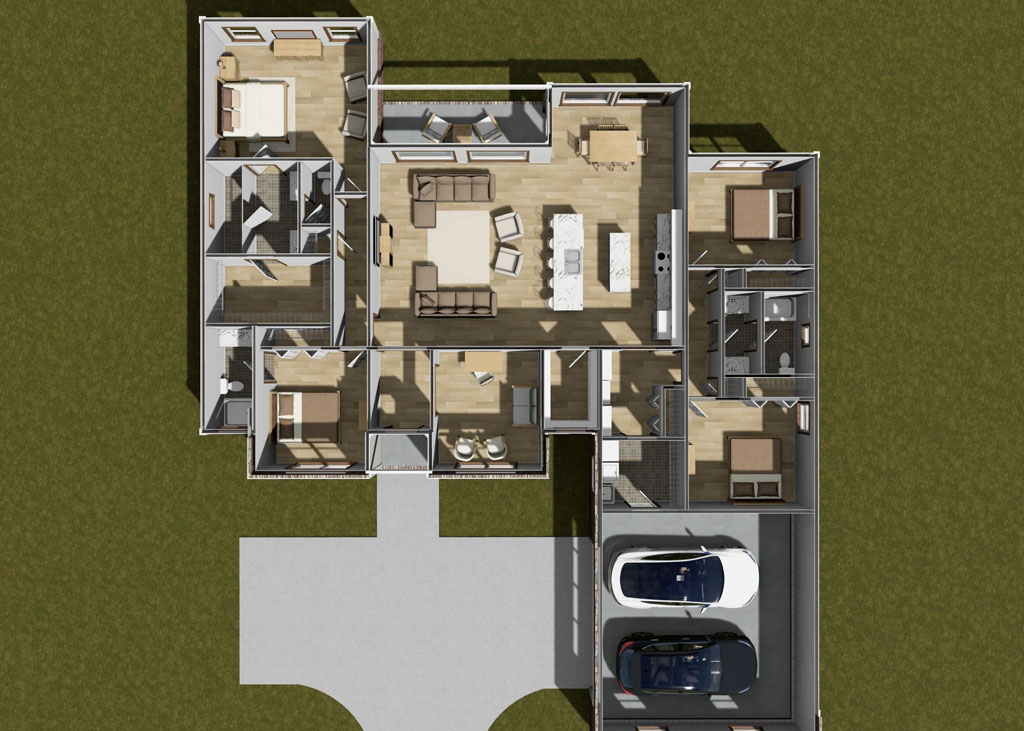
Open-concept living has been popular with buyers for years, but it also benefits builders. Fewer walls mean fewer materials and less labor. Combining the kitchen, dining, and living areas into one shared space reduces drywall, framing, and electrical work. It also allows for more flexibility with furniture placement and gives smaller homes a more spacious feel.
Open layouts are especially effective in plans under 1,800 square feet, where maximizing usable space is crucial. For example, a 1,400-square-foot open-plan home can often feel just as livable as a more compartmentalized 1,700-square-foot layout.
Efficient Use of Square Footage
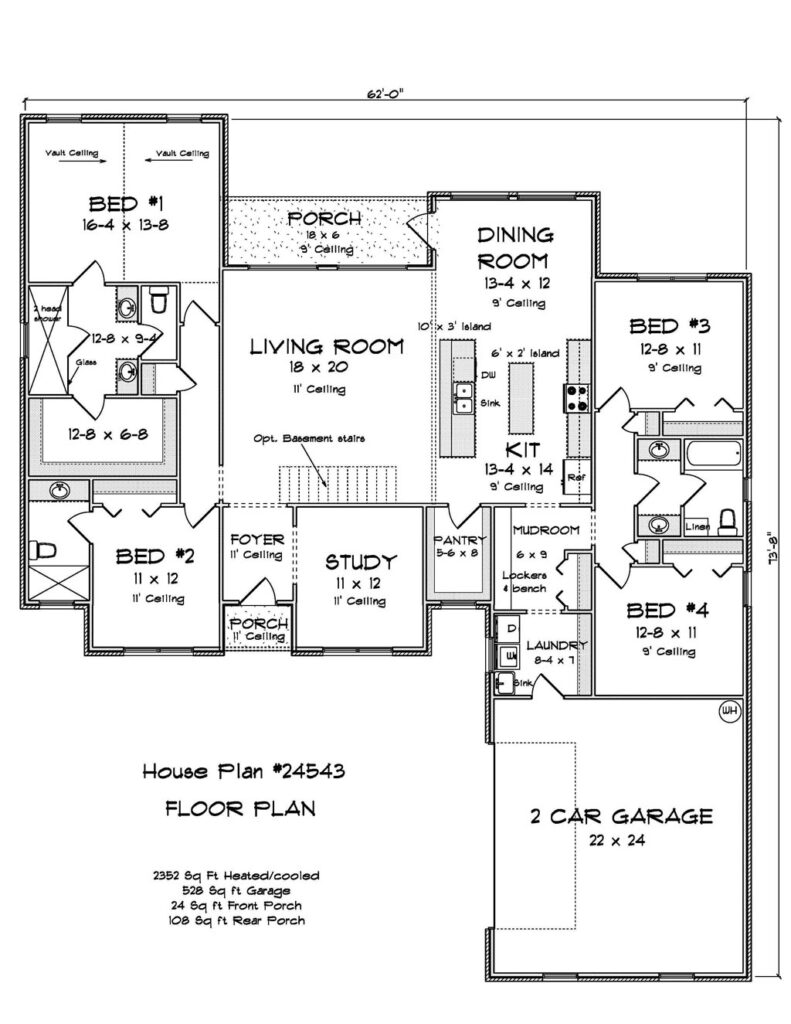
Bigger isn’t always better, particularly when every extra square foot adds cost. According to Statista, the average construction cost per square foot for a single-family home in the U.S. was around $160 in 2023, although this varies by region. Efficient home designs prioritize function over excess, avoiding large, unused formal rooms that don’t add value for the typical buyer.
Well-designed smaller homes with features like walk-in closets, large kitchen islands, and dual-use spaces (think home office/guest room combos) appeal to today’s buyers without bloating construction budgets. Features that serve more than one purpose provide flexibility for homeowners and cost-savings for developers.
Material Selection and Standard Sizing
Plans that are designed with standard-sized building materials in mind can also reduce waste and save time. For example, homes that are designed around standard 4-foot sheet widths for drywall and plywood panels can minimize cuts and scraps. Selecting plans that accommodate stock cabinet sizes, standard window dimensions, and simple trim packages also help keep costs down.
Many of the most popular and cost-effective house plans today are designed with these principles built in. They allow developers to source materials easily and avoid long lead times or costly custom work.
So Which Designs Should Developers Consider?
At W.L. Martin Home Designs, we’ve seen strong demand for house plans that blend affordability with style. Ranch-style homes with open layouts and modest footprints continue to be favorites among builders. Compact two-story designs with three or four bedrooms are also top performers, particularly in growing suburban neighborhoods.
Plans ranging from 1,200 to 2,000 square feet tend to offer the best balance between construction cost and resale value. They’re large enough to appeal to families, yet efficient enough to stay within budget and build quickly. Builders who stick with simple foundations, clean rooflines, and well-thought-out interiors are usually rewarded with faster construction times and fewer budget surprises.
Final Thoughts
Choosing a cost-efficient home design isn’t just about picking a smaller plan. It’s about finding a layout that’s simple to build, appeals to today’s buyers, and uses space and materials wisely. With the right design, developers can streamline their process, reduce waste, and boost profits without compromising quality or curb appeal.
If you’re looking for plans that check all those boxes, browse our collection at W.L. Martin Home Designs. We specialize in designs that are as buildable as they are livable, so you can break ground with confidence.
Leave a Reply