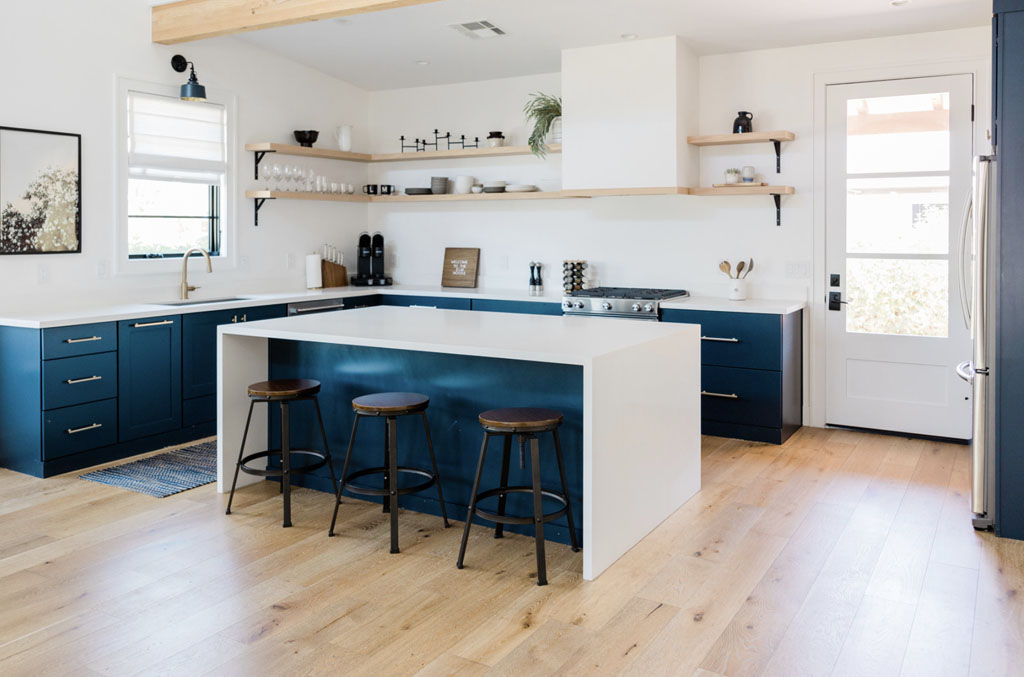
When a home comes in under 2,000 square feet, the kitchen carries the listing. It is where buyers linger, where photos win clicks, and where the floor plan either feels effortless or feels like a compromise. The surprise for many developers is that a small kitchen can punch above its size without blowing the budget. It just needs the right shape, smart clearances, honest storage, and a few performance choices that show up in the first five minutes of a tour.
Industry surveys keep confirming what you already see on site. NAHB’s What Home Buyers Really Want has long shown kitchen features near the top of buyer wish lists, particularly storage like pantry solutions. Houzz trend data continues to put islands and added storage among the most popular upgrades. Remodeling’s Cost vs. Value reporting shows that sensible kitchen improvements tend to return a solid share at resale compared with many other projects. Translation for builders and BTR operators. Put money where buyers can feel it and your photos will do the rest.
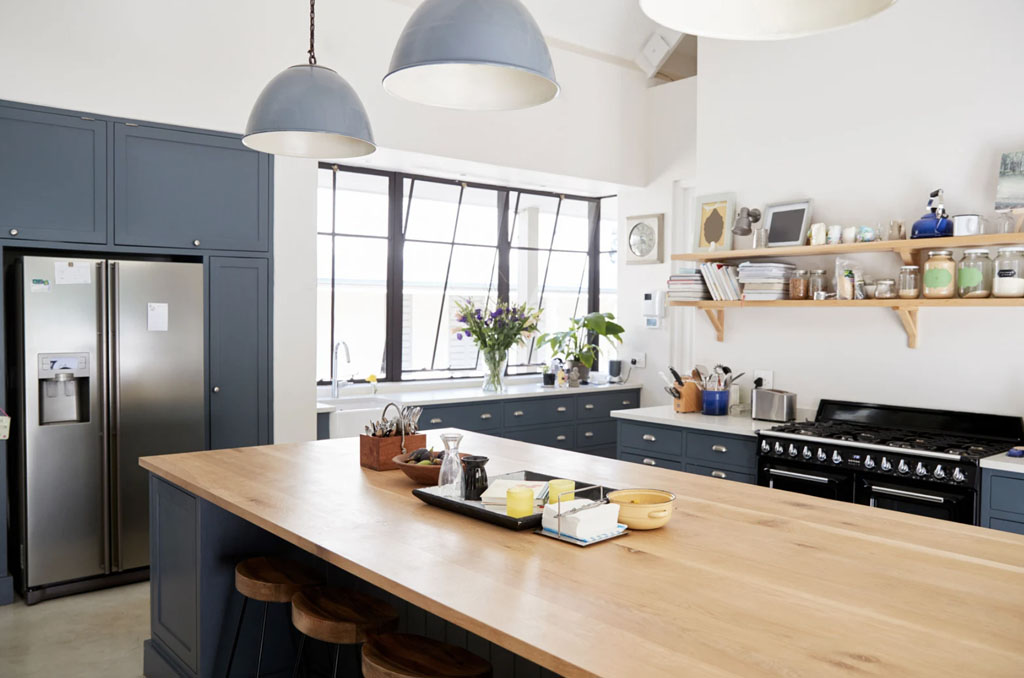
Shape choices that make small kitchens feel big
The first move is shape. In compact footprints, four layouts repeatedly live large. A one wall kitchen with an island is clean and perfect for narrow plans. An L shape with an island opens to living and gives you a protected prep corner. A galley that ends on a window works beautifully in townhomes and is fast to build. A tight U shape can deliver the most counter space on slightly wider lots if you avoid deep, dead corner traps. Keep the big three on two walls, not three, and movement gets easier for any cook.
Clearances that create real flow
Flow beats finishes, and flow comes from clearances that work in real life. The National Kitchen and Bath Association’s planning guidance is an easy standard to build around. Target about 42 inches for a one cook aisle and 48 inches if two people will be in the space. Leave landing space beside the fridge door and near the range so hot pans have a home. Give the main sink a generous stretch on at least one side so prep does not collide with cleanup. These numbers are not fancy. They are the reason buyers can walk a model and think this just works.
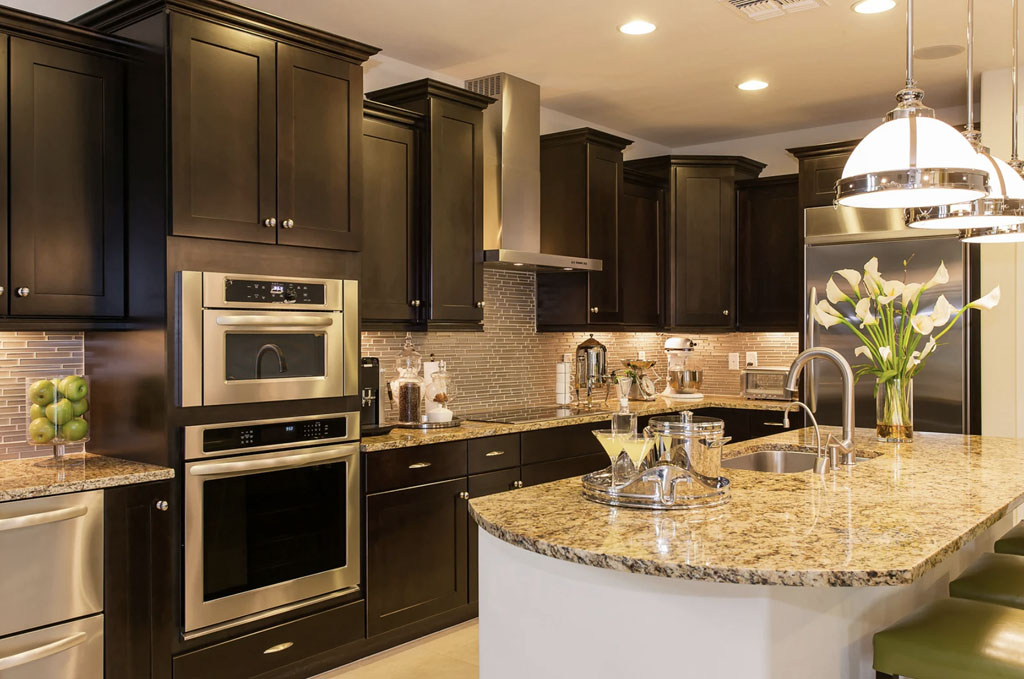
Storage is where small kitchens fail or fly. A right sized pantry makes a big difference. On many plans, a 24 inch deep reach in with full height shelving or a 36 inch cabinet pantry with pullouts outperforms a token walk in. Go vertical with 42 inch uppers or stacked cabinets to capture cubic feet without widening the room. Use drawer bases where plates and pots live so counters stay clear. Treat corner cabinets like grown ups and use simple blind corner pullouts rather than expensive gadgets that still waste space. Buyers can feel when clutter has been designed out of the picture.
Appliances can open up space without feeling compromised. The 24 inch category has matured, which means a narrower dishwasher and counter depth refrigeration can free precious inches while still feeling premium. ENERGY STAR’s guidance gives you an easy script for marketing and for utility exposure in rentals. Certified refrigerators use roughly 9 percent less energy than standard models, while certified dishwashers cut energy by about 12 percent and water use by about 30 percent compared with non certified units. Pair a 30 inch slide in range with a 24 inch dishwasher and you get real cooking power plus the cabinet inches you need for storage.
Appliances, lighting, and ventilation that work quietly
Light, ventilation, and sound quality are non negotiable, especially in open plans. Put a window at the sink or the end of a galley so the space reads bright in person and in photos. Layer warm white LED under cabinet lighting so the counter stays evenly lit without glare. Choose a quiet, ducted hood that actually clears steam and odor rather than just recirculating it. If dishwashers run during dinner, keep the decibel rating low enough that conversation does not compete.
Islands, finishes, and small touches buyers love
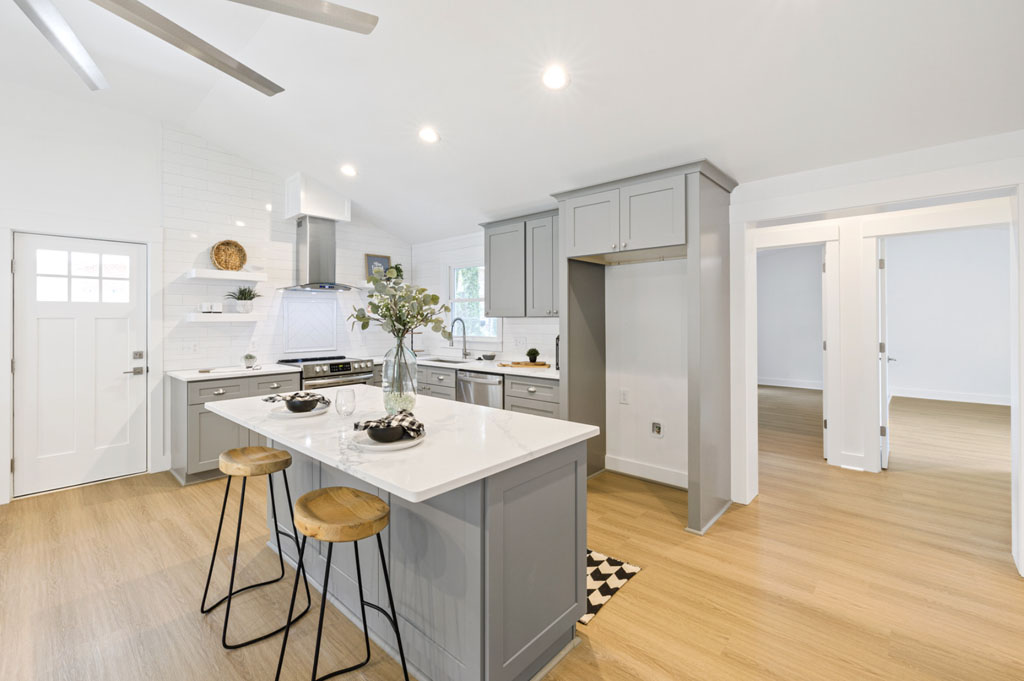
The island is the Swiss Army knife in 1,200 to 1,800 square foot homes. Aim for a depth that lets you do storage on both sides and a length that seats four comfortably. If aisles are too tight for an island, a peninsula often delivers the same seating and storage with one less walkway to police. In either case, keep seating comfortable with adequate knee space and stool width so the island looks inviting in photos and functions on pizza night.
Finish specs can do double duty for marketing and maintenance. A light mid tone quartz tends to hide crumbs better than pure white while still reading bright. A simple shaker or slim rail door in a satin finish is easy to touch up and looks right across multiple elevations. Full height splash behind the range photographs beautifully while a modest splash elsewhere controls cost. In BTR, step up hardware quality one notch to reduce service calls. Houzz trend reporting continues to show that islands, quartz, and under cabinet lighting earn their keep in buyer satisfaction and in listing images.
Exceptional conveniences
Do not forget the little conveniences that signal a thought through plan. Put a duplex outlet in the pantry for small appliances, hide a charging drawer in the island so cords do not take over the counter, and stub a data line to the fridge location so a future smart package does not require surgery. These touches are inexpensive and easy to standardize across a series.
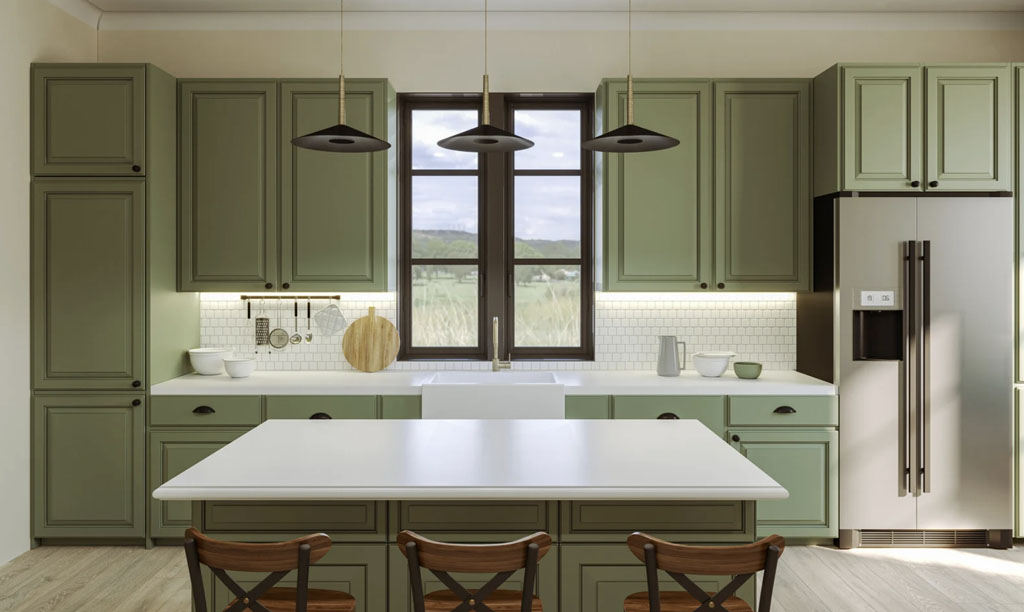
The business case is straightforward. Kitchens sell houses, and functional small kitchens sell faster. NAHB’s long running buyer research, Houzz preference trends, and Cost vs. Value returns all point in the same direction. Deliver a kitchen that moves with 42 inch aisles, hides clutter with honest storage, provides seating that feels generous, and photographs clean. Your absorption improves, your buyer pool widens, and your appraisal conversations get easier.
W. L. Martin Home Designs leans into this approach across plans from 400 to 2,500 square feet. You will see islands that seat four without crowding, L shapes and galleys that hit NKBA clearances, pantry solutions tucked under stairs or beside the fridge wall, and appliance packages that include 24 inch options for narrow lots. Many plans place the sink on a window wall for flattering light and keep loud mechanicals away from the cooking zone so conversations stay easy. If your community needs a peninsula instead of an island, a bigger pantry in the same footprint, or a cabinet module that repeats across multiple elevations, those tweaks are straightforward.
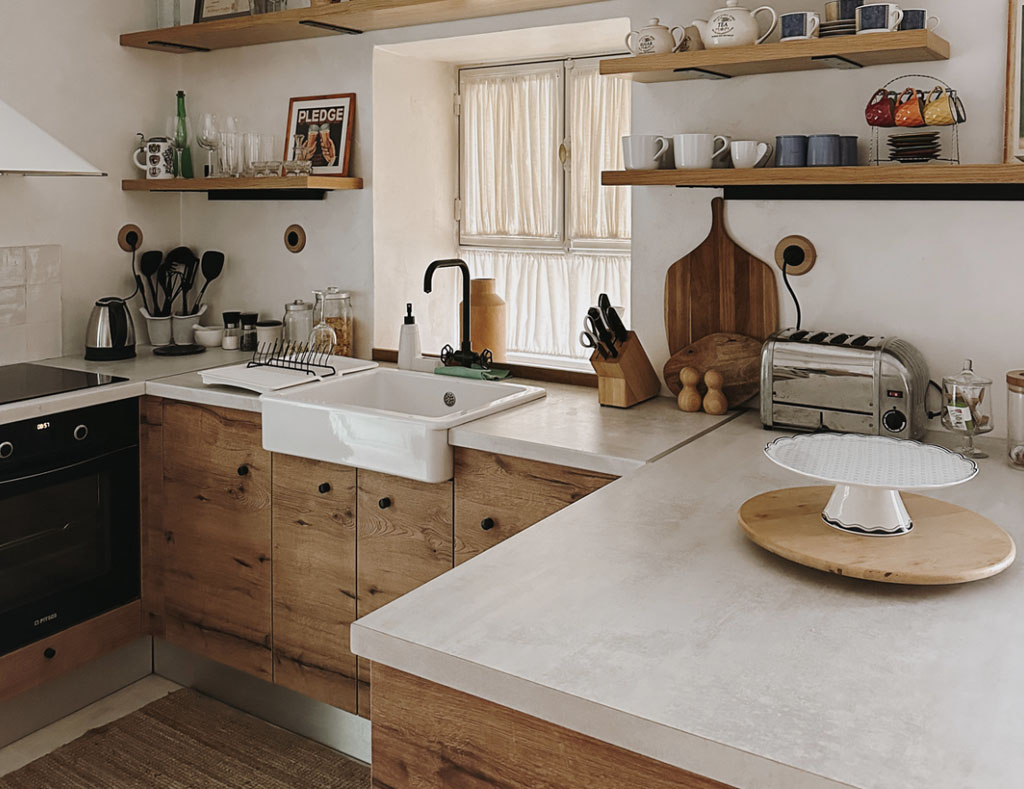
For teams that like a quick punch list, focus on these wins you can repeat without fuss. Keep aisles around 42 inches, give the fridge and range real landing space, prefer drawer bases, plan an island or peninsula that seats at least three, specify a quiet ducted hood and under cabinet lighting, and standardize cabinet runs and appliance openings across models. Small moves, big impact.
Want to point buyers to plans where the kitchen does the selling. W. L. Martin has several ready to go, and the team can adjust clearances and storage to hit the sweet spot for your lot mix and budget.